
LinearProgressIndicator
Functions summary
Unit |
@Composable |
Cmn
|
Unit |
@ComposableThis function is deprecated. Use the overload that takes `progress` as a lambda |
Cmn
|
Unit |
@Composable |
Cmn
|
Functions
LinearProgressIndicator
@Composable
fun LinearProgressIndicator(
    modifier: Modifier = Modifier,
    color: Color = ProgressIndicatorDefaults.linearColor,
    trackColor: Color = ProgressIndicatorDefaults.linearTrackColor,
    strokeCap: StrokeCap = ProgressIndicatorDefaults.LinearStrokeCap,
    gapSize: Dp = ProgressIndicatorDefaults.LinearIndicatorTrackGapSize
): Unit
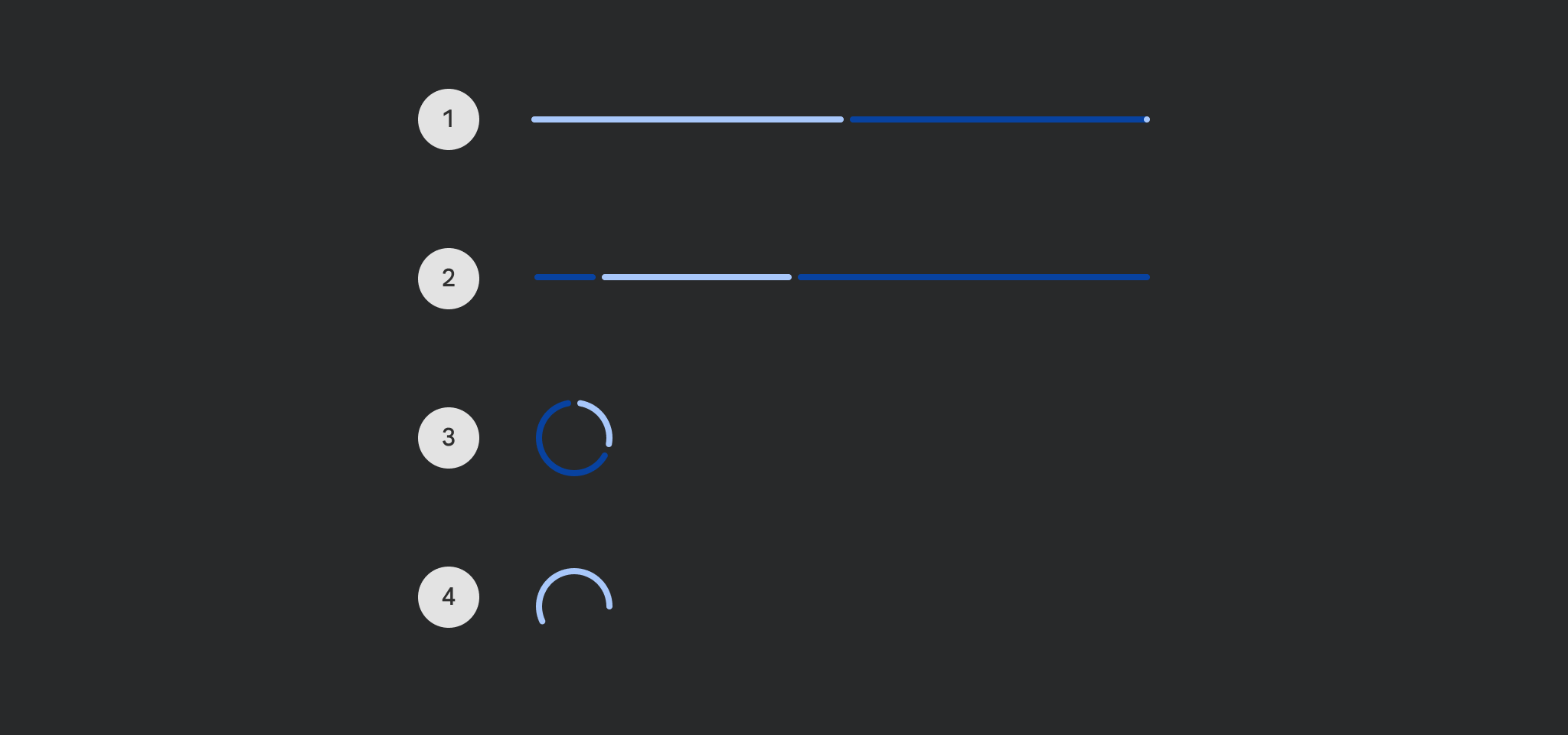
Material Design indeterminate linear progress indicator
Progress indicators express an unspecified wait time or display the duration of a process.
import androidx.compose.foundation.layout.Column
import androidx.compose.material3.LinearProgressIndicator
import androidx.compose.ui.Alignment

Column(horizontalAlignment = Alignment.CenterHorizontally) { LinearProgressIndicator() }
| Parameters | |
|---|---|
modifier: Modifier = Modifier |
the |
color: Color = ProgressIndicatorDefaults.linearColor |
color of this progress indicator |
trackColor: Color = ProgressIndicatorDefaults.linearTrackColor |
color of the track behind the indicator, visible when the progress has not reached the area of the overall indicator yet |
strokeCap: StrokeCap = ProgressIndicatorDefaults.LinearStrokeCap |
stroke cap to use for the ends of this progress indicator |
gapSize: Dp = ProgressIndicatorDefaults.LinearIndicatorTrackGapSize |
size of the gap between the progress indicator and the track |
LinearProgressIndicator
@Composable
funLinearProgressIndicator(
progress: Float,
modifier: Modifier = Modifier,
color: Color = ProgressIndicatorDefaults.linearColor,
trackColor: Color = ProgressIndicatorDefaults.linearTrackColor,
strokeCap: StrokeCap = ProgressIndicatorDefaults.LinearStrokeCap
): Unit
LinearProgressIndicator
@Composable
fun LinearProgressIndicator(
    progress: () -> Float,
    modifier: Modifier = Modifier,
    color: Color = ProgressIndicatorDefaults.linearColor,
    trackColor: Color = ProgressIndicatorDefaults.linearTrackColor,
    strokeCap: StrokeCap = ProgressIndicatorDefaults.LinearStrokeCap,
    gapSize: Dp = ProgressIndicatorDefaults.LinearIndicatorTrackGapSize,
    drawStopIndicator: DrawScope.() -> Unit = {
        drawStopIndicator(
            drawScope = this,
            stopSize = ProgressIndicatorDefaults.LinearTrackStopIndicatorSize,
            color = color,
            strokeCap = strokeCap,
        )
    }
): Unit
Material Design determinate linear progress indicator
Progress indicators express an unspecified wait time or display the duration of a process.
By default there is no animation between progress values. You can use ProgressIndicatorDefaults.ProgressAnimationSpec as the default recommended androidx.compose.animation.core.AnimationSpec when animating progress, such as in the following example:
import androidx.compose.animation.core.animateFloatAsState
import androidx.compose.foundation.layout.Column
import androidx.compose.foundation.layout.Spacer
import androidx.compose.foundation.layout.requiredHeight
import androidx.compose.foundation.layout.width
import androidx.compose.material3.LinearProgressIndicator
import androidx.compose.material3.ProgressIndicatorDefaults
import androidx.compose.material3.Slider
import androidx.compose.material3.Text
import androidx.compose.material3.rememberSliderState
import androidx.compose.runtime.getValue
import androidx.compose.runtime.remember
import androidx.compose.ui.Alignment
import androidx.compose.ui.Modifier
import androidx.compose.ui.unit.dp

val sliderState = rememberSliderState(0.1f)
val animatedProgress by
    animateFloatAsState(
        targetValue = sliderState.value,
        animationSpec = ProgressIndicatorDefaults.ProgressAnimationSpec,
    )

Column(horizontalAlignment = Alignment.CenterHorizontally) {
    LinearProgressIndicator(progress = { animatedProgress })
    Spacer(Modifier.requiredHeight(30.dp))
    Text("Set progress:")
    Slider(
        state = sliderState,
        onValueChange = { sliderState.value = it },
        modifier = Modifier.width(300.dp),
    )
}
| Parameters | |
|---|---|
progress: () -> Float |
the progress of this progress indicator, where 0.0 represents no progress and 1.0 represents full progress. Values outside of this range are coerced into the range. |
modifier: Modifier = Modifier |
the |
color: Color = ProgressIndicatorDefaults.linearColor |
color of this progress indicator |
trackColor: Color = ProgressIndicatorDefaults.linearTrackColor |
color of the track behind the indicator, visible when the progress has not reached the area of the overall indicator yet |
strokeCap: StrokeCap = ProgressIndicatorDefaults.LinearStrokeCap |
stroke cap to use for the ends of this progress indicator |
gapSize: Dp = ProgressIndicatorDefaults.LinearIndicatorTrackGapSize |
size of the gap between the progress indicator and the track |
drawStopIndicator: DrawScope.() -> Unit = {
        drawStopIndicator(
            drawScope = this,
            stopSize = ProgressIndicatorDefaults.LinearTrackStopIndicatorSize,
            color = color,
            strokeCap = strokeCap,
        )
} |
lambda that will be called to draw the stop indicator. Note that a custom indicator implementation should also handle RTL layouts. |