

Giống như các bản phát hành trước, Android 16 có các thay đổi về hành vi có thể ảnh hưởng đến ứng dụng của bạn. Những thay đổi về hành vi sau đây chỉ áp dụng cho ứng dụng nhắm đến Android 16 trở lên. Nếu ứng dụng của bạn nhắm đến Android 16 trở lên, bạn nên điều chỉnh ứng dụng để hỗ trợ những hành vi này (nếu cần).
Ngoài ra, hãy nhớ tham khảo danh sách các thay đổi về hành vi ảnh hưởng đến tất cả ứng dụng chạy trên Android 16 bất kể targetSdkVersion của ứng dụng.
Trải nghiệm người dùng và giao diện người dùng hệ thống
Android 16 (API cấp 36) có những thay đổi sau đây nhằm mang đến trải nghiệm người dùng nhất quán và trực quan hơn.
Lựa chọn không hiển thị tràn viền sẽ không còn nữa
Android 15 thực thi chế độ hiển thị tràn viền cho các ứng dụng nhắm đến Android 15 (API cấp 35), nhưng ứng dụng của bạn có thể chọn không sử dụng bằng cách đặt R.attr#windowOptOutEdgeToEdgeEnforcement thành true. Đối với các ứng dụng nhắm đến Android 16 (API cấp 36), R.attr#windowOptOutEdgeToEdgeEnforcement sẽ không được dùng nữa và bị vô hiệu hoá, đồng thời ứng dụng của bạn không thể chọn không hiển thị tràn viền.
- Nếu ứng dụng của bạn nhắm đến Android 16 (API cấp 36) và đang chạy trên một thiết bị Android 15, thì
R.attr#windowOptOutEdgeToEdgeEnforcementvẫn hoạt động. - Nếu ứng dụng của bạn nhắm đến Android 16 (API cấp 36) và đang chạy trên thiết bị Android 16, thì
R.attr#windowOptOutEdgeToEdgeEnforcementsẽ bị tắt.
Để kiểm thử trong Android 16, hãy đảm bảo ứng dụng của bạn hỗ trợ chế độ hiển thị tràn viền và xoá mọi hoạt động sử dụng R.attr#windowOptOutEdgeToEdgeEnforcement để ứng dụng của bạn cũng hỗ trợ chế độ hiển thị tràn viền trên thiết bị Android 15. Để hỗ trợ chế độ hiển thị tràn viền, hãy xem hướng dẫn về Compose và Khung hiển thị.
Bạn phải di chuyển hoặc chọn không sử dụng tính năng xem trước thao tác quay lại
For apps targeting Android 16 (API level 36) or higher and running on an
Android 16 or higher device, the predictive back system animations
(back-to-home, cross-task, and cross-activity) are enabled by default.
Additionally, onBackPressed is not called and
KeyEvent.KEYCODE_BACK is not dispatched anymore.
If your app intercepts the back event and you haven't migrated to predictive
back yet, update your app to use supported back navigation APIs, or
temporarily opt out by setting the
android:enableOnBackInvokedCallback attribute to false in the
<application> or <activity> tag of your app's AndroidManifest.xml file.
Các API phông chữ Elegant không được dùng nữa và bị vô hiệu hoá
Các ứng dụng nhắm đến Android 15 (API cấp 35) có thuộc tính elegantTextHeight
TextView được đặt thành true theo mặc định, thay thế phông chữ nhỏ gọn bằng một phông chữ dễ đọc hơn nhiều. Bạn có thể ghi đè điều này bằng cách đặt thuộc tính elegantTextHeight thành false.
Android 16 không dùng thuộc tính elegantTextHeight nữa và thuộc tính này sẽ bị bỏ qua khi ứng dụng của bạn nhắm đến Android 16. "Phông chữ giao diện người dùng" do các API này kiểm soát sẽ ngừng hoạt động, vì vậy, bạn nên điều chỉnh mọi bố cục để đảm bảo việc hiển thị văn bản nhất quán và không bị ảnh hưởng trong tương lai bằng tiếng Ả Rập, tiếng Lào, tiếng Miến Điện, tiếng Tamil, tiếng Gujarati, tiếng Kannada, tiếng Malayalam, tiếng Odia, tiếng Telugu hoặc tiếng Thái.
 Hành vi
 elegantTextHeight đối với các ứng dụng nhắm đến Android 14 (API cấp 34) trở xuống hoặc đối với các ứng dụng nhắm đến Android 15 (API cấp 35) đã ghi đè giá trị mặc định bằng cách đặt thuộc tính elegantTextHeight thành false.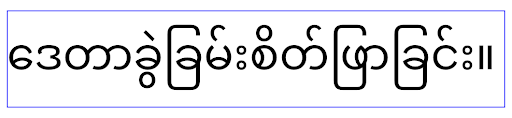 Hành vi
 elegantTextHeight đối với các ứng dụng nhắm đến Android 16 (API cấp 36) hoặc đối với các ứng dụng nhắm đến Android 15 (API cấp 35) không ghi đè giá trị mặc định bằng cách đặt thuộc tính elegantTextHeight thành false.Chức năng cốt lõi
Android 16 (API cấp 36) bao gồm những thay đổi sau đây giúp sửa đổi hoặc mở rộng nhiều chức năng cốt lõi của hệ thống Android.
Tối ưu hoá lịch làm việc theo mức giá cố định
Prior to targeting Android 16, when scheduleAtFixedRate
missed a task execution due to being outside a valid
process lifecycle, all missed executions immediately
execute when the app returns to a valid lifecycle.
When targeting Android 16, at most one missed execution of
scheduleAtFixedRate is immediately executed when the app
returns to a valid lifecycle. This behavior change is expected to improve app
performance. Test this behavior in your app to check if your app is impacted.
You can also test by using the app compatibility framework
and enabling the STPE_SKIP_MULTIPLE_MISSED_PERIODIC_TASKS compat flag.
Kiểu dáng thiết bị
Android 16 (API cấp 36) có những thay đổi sau đây đối với các ứng dụng khi hiển thị trên thiết bị có màn hình lớn.
Bố cục thích ứng (Adaptive Layouts)
With Android apps now running on a variety of devices (such as phones, tablets, foldables, desktops, cars, and TVs) and windowing modes on large screens (such as split screen and desktop windowing), developers should build Android apps that adapt to any screen and window size, regardless of device orientation. Paradigms like restricting orientation and resizability are too restrictive in today's multidevice world.
Ignore orientation, resizability, and aspect ratio restrictions
For apps targeting Android 16 (API level 36), Android 16 includes changes to how the system manages orientation, resizability, and aspect ratio restrictions. On displays with smallest width >= 600dp, the restrictions no longer apply. Apps also fill the entire display window, regardless of aspect ratio or a user's preferred orientation, and pillarboxing isn't used.
This change introduces a new standard platform behavior. Android is moving toward a model where apps are expected to adapt to various orientations, display sizes, and aspect ratios. Restrictions like fixed orientation or limited resizability hinder app adaptability, so we recommend making your app adaptive to deliver the best possible user experience.
You can also test this behavior by using the
app compatibility framework and
enabling the UNIVERSAL_RESIZABLE_BY_DEFAULT compat flag.
Common breaking changes
Ignoring orientation, resizability, and aspect ratio restrictions might impact your app's UI on some devices, especially elements that were designed for small layouts locked in portrait orientation: for example, issues like stretched layouts and off-screen animations and components. Any assumptions about aspect ratio or orientation can cause visual issues with your app. Learn more about how to avoid them and improve your app's adaptive behaviour.
Allowing device rotation results in more activity re-creation, which can result in losing user state if not properly preserved. Learn how to correctly save UI state in Save UI states.
Implementation details
The following manifest attributes and runtime APIs are ignored across large screen devices in full-screen and multi-window modes:
screenOrientationresizableActivityminAspectRatiomaxAspectRatiosetRequestedOrientation()getRequestedOrientation()
The following values for screenOrientation, setRequestedOrientation(), and
getRequestedOrientation() are ignored:
portraitreversePortraitsensorPortraituserPortraitlandscapereverseLandscapesensorLandscapeuserLandscape
Regarding display resizability, android:resizeableActivity="false",
android:minAspectRatio, and android:maxAspectRatio have no effect.
For apps targeting Android 16 (API level 36), app orientation, resizability, and aspect ratio constraints are ignored on large screens by default, but every app that isn't fully ready can temporarily override this behavior by opting out (which results in the previous behavior of being placed in compatibility mode).
Exceptions
The Android 16 orientation, resizability, and aspect ratio restrictions don't apply in the following situations:
- Games (based on the
android:appCategoryflag) - Users explicitly opting in to the app's default behavior in aspect ratio settings of the device
- Screens that are smaller than
sw600dp
Opt out temporarily
To opt out a specific activity, declare the
PROPERTY_COMPAT_ALLOW_RESTRICTED_RESIZABILITY manifest property:
<activity ...>
  <property android:name="android.window.PROPERTY_COMPAT_ALLOW_RESTRICTED_RESIZABILITY" android:value="true" />
  ...
</activity>
If too many parts of your app aren't ready for Android 16, you can opt out completely by applying the same property at the application level:
<application ...>
  <property android:name="android.window.PROPERTY_COMPAT_ALLOW_RESTRICTED_RESIZABILITY" android:value="true" />
</application>
Sức khoẻ và thể chất
Android 16 (API cấp 36) có các thay đổi sau đây liên quan đến dữ liệu về sức khoẻ và thể dục.
Quyền đối với dữ liệu về sức khoẻ và thể dục
For apps targeting Android 16 (API level 36) or higher,
BODY_SENSORS permissions use more granular permissions
under android.permissions.health, which Health Connect
also uses. As of Android 16, any API previously requiring BODY_SENSORS
or BODY_SENSORS_BACKGROUND requires the corresponding
android.permissions.health permission instead. This affects the following data
types, APIs, and foreground service types:
HEART_RATE_BPMfrom Health Services on Wear OSSensor.TYPE_HEART_RATEfrom Android Sensor ManagerheartRateAccuracyandheartRateBpmfromProtoLayouton Wear OSFOREGROUND_SERVICE_TYPE_HEALTHwhere the respectiveandroid.permission.healthpermission is needed in place ofBODY_SENSORS
If your app uses these APIs, it should request the respective granular permissions:
- For while-in-use monitoring of Heart Rate, SpO2, or Skin Temperature:
request the granular permission under
android.permissions.health, such asREAD_HEART_RATEinstead ofBODY_SENSORS. - For background sensor access: request
READ_HEALTH_DATA_IN_BACKGROUNDinstead ofBODY_SENSORS_BACKGROUND.
These permissions are the same as those that guard access to reading data from Health Connect, the Android datastore for health, fitness, and wellness data.
Mobile apps
Mobile apps migrating to use the READ_HEART_RATE and other granular
permissions must also declare an activity to display
the app's privacy policy. This is the same requirement as Health Connect.
Khả năng kết nối
Android 16 (API cấp 36) có những thay đổi sau đây trong ngăn xếp Bluetooth để cải thiện khả năng kết nối với các thiết bị ngoại vi.
Ý định mới để xử lý tình trạng mất liên kết và các thay đổi về chế độ mã hoá
As part of the Improved bond loss handling, Android 16 also introduces 2 new intents to provide apps with greater awareness of bond loss and encryption changes.
Apps targeting Android 16 can now:
- Receive an
ACTION_KEY_MISSINGintent when remote bond loss is detected, allowing them to provide more informative user feedback and take appropriate actions. - Receive an
ACTION_ENCRYPTION_CHANGEintent whenever encryption status of the link changes. This includes encryption status change, encryption algorithm change, and encryption key size change. Apps must consider the bond restored if the link is successfully encrypted upon receivingACTION_ENCRYPTION_CHANGEintent later.
Adapting to varying OEM implementations
While Android 16 introduces these new intents, their implementation and broadcasting can vary across different device manufacturers (OEMs). To ensure your app provides a consistent and reliable experience across all devices, developers should design their bond loss handling to gracefully adapt to these potential variations.
We recommend the following app behaviors:
If the
ACTION_KEY_MISSINGintent is broadcast:The ACL (Asynchronous Connection-Less) link will be disconnected by the system, but the bond information for the device will be retained (as described here).
Your app should use this intent as the primary signal for bond loss detection and guiding the user to confirm the remote device is in range before initiating device forgetting or re-pairing.
If a device disconnects after
ACTION_KEY_MISSINGis received, your app should be cautious about reconnecting, as the device may no longer be bonded with the system.If the
ACTION_KEY_MISSINGintent is NOT broadcast:The ACL link will remain connected, and the bond information for the device will be removed by the system, same to behavior in Android 15.
In this scenario, your app should continue its existing bond loss handling mechanisms as in previous Android releases, to detect and manage bond loss events.
Cách mới để xoá mối liên kết Bluetooth
Giờ đây, tất cả ứng dụng nhắm đến Android 16 đều có thể huỷ ghép nối thiết bị Bluetooth bằng cách sử dụng API công khai trong CompanionDeviceManager. Nếu một thiết bị đồng hành đang được quản lý dưới dạng liên kết CDM, thì ứng dụng có thể kích hoạt việc xoá liên kết Bluetooth bằng cách sử dụng API removeBond(int) mới trên thiết bị được liên kết. Ứng dụng có thể theo dõi các thay đổi về trạng thái liên kết bằng cách nghe sự kiện truyền tin của thiết bị Bluetooth ACTION_BOND_STATE_CHANGED.
Bảo mật
Android 16 (API cấp 36) có những thay đổi sau đây về bảo mật.
Khoá phiên bản MediaStore
Đối với các ứng dụng nhắm đến Android 16 trở lên, MediaStore#getVersion() hiện sẽ là duy nhất cho mỗi ứng dụng. Điều này giúp loại bỏ các thuộc tính nhận dạng khỏi chuỗi phiên bản để ngăn chặn việc lợi dụng và sử dụng cho các kỹ thuật tạo vân tay số. Ứng dụng không được đưa ra bất kỳ giả định nào về định dạng của phiên bản này. Các ứng dụng phải xử lý các thay đổi về phiên bản khi sử dụng API này và trong hầu hết các trường hợp, không cần thay đổi hành vi hiện tại, trừ phi nhà phát triển đã cố gắng suy luận thêm thông tin nằm ngoài phạm vi dự kiến của API này.
Ý định an toàn hơn
The Safer Intents feature is a multi-phase security initiative designed to improve the security of Android's intent resolution mechanism. The goal is to protect apps from malicious actions by adding checks during intent processing and filtering intents that don't meet specific criteria.
In Android 15 the feature focused on the sending app, now with Android 16, shifts control to the receiving app, allowing developers to opt-in to strict intent resolution using their app manifest.
Two key changes are being implemented:
Explicit Intents Must Match the Target Component's Intent Filter: If an intent explicitly targets a component, it should match that component's intent filter.
Intents Without an Action Cannot Match any Intent Filter: Intents that don't have an action specified shouldn't be resolved to any intent filter.
These changes only apply when multiple apps are involved and don't affect intent handling within a single app.
Impact
The opt-in nature means that developers must explicitly enable it in their app manifest for it to take effect. As a result, the feature's impact will be limited to apps whose developers:
- Are aware of the Safer Intents feature and its benefits.
- Actively choose to incorporate stricter intent handling practices into their apps.
This opt-in approach minimizes the risk of breaking existing apps that may rely on the current less-secure intent resolution behavior.
While the initial impact in Android 16 may be limited, the Safer Intents initiative has a roadmap for broader impact in future Android releases. The plan is to eventually make strict intent resolution the default behavior.
The Safer Intents feature has the potential to significantly enhance the security of the Android ecosystem by making it more difficult for malicious apps to exploit vulnerabilities in the intent resolution mechanism.
However, the transition to opt-out and mandatory enforcement must be carefully managed to address potential compatibility issues with existing apps.
Implementation
Developers need to explicitly enable stricter intent matching using the
intentMatchingFlags attribute in their app manifest.
Here is an example where the feature is opt-in for the entire app,
but disabled/opt-out on a receiver:
<application android:intentMatchingFlags="enforceIntentFilter">
    <receiver android:name=".MyBroadcastReceiver" android:exported="true" android:intentMatchingFlags="none">
        <intent-filter>
            <action android:name="com.example.MY_CUSTOM_ACTION" />
        </intent-filter>
        <intent-filter>
            <action android:name="com.example.MY_ANOTHER_CUSTOM_ACTION" />
        </intent-filter>
    </receiver>
</application>
More on the supported flags:
| Flag Name | Description |
|---|---|
| enforceIntentFilter | Enforces stricter matching for incoming intents |
| none | Disables all special matching rules for incoming intents. When specifying multiple flags, conflicting values are resolved by giving precedence to the "none" flag |
| allowNullAction | Relaxes the matching rules to allow intents without an action to match. This flag to be used in conjunction with "enforceIntentFilter" to achieve a specific behavior |
Testing and Debugging
When the enforcement is active, apps should function correctly if the intent
caller has properly populated the intent.
However, blocked intents will trigger warning log messages like
"Intent does not match component's intent filter:" and "Access blocked:"
with the tag "PackageManager."
This indicates a potential issue that could impact the app and requires
attention.
Logcat filter:
tag=:PackageManager & (message:"Intent does not match component's intent filter:" | message: "Access blocked:")
Lọc lệnh gọi hệ thống GPU
Để tăng cường bảo mật cho bề mặt GPU Mali, các IOCTL GPU Mali đã ngừng hoạt động hoặc chỉ dành cho việc phát triển GPU đã bị chặn trong các bản dựng phát hành công khai. Ngoài ra, các IOCTL được dùng để lập hồ sơ GPU đã bị hạn chế đối với quy trình shell hoặc các ứng dụng có thể gỡ lỗi. Hãy tham khảo thông tin cập nhật về SAC để biết thêm thông tin về chính sách ở cấp nền tảng.
Thay đổi này diễn ra trên các thiết bị Pixel sử dụng GPU Mali (Pixel 6 – 9). Arm đã cung cấp danh mục chính thức về IOCTL trong Documentation/ioctl-categories.rst của bản phát hành r54p2. Danh sách này sẽ tiếp tục được duy trì trong các bản phát hành trình điều khiển trong tương lai.
Thay đổi này không ảnh hưởng đến các API đồ hoạ được hỗ trợ (bao gồm cả Vulkan và OpenGL), đồng thời không ảnh hưởng đến nhà phát triển hoặc các ứng dụng hiện có. Các công cụ lập hồ sơ GPU như Streamline Performance Analyzer và Android GPU Inspector sẽ không bị ảnh hưởng.
Thử nghiệm
Nếu bạn thấy một thông báo từ chối của SELinux tương tự như sau, thì có thể ứng dụng của bạn đã chịu ảnh hưởng của thay đổi này:
06-30 10:47:18.617 20360 20360 W roidJUnitRunner: type=1400 audit(0.0:85): avc:  denied  { ioctl }
for  path="/dev/mali0" dev="tmpfs" ino=1188 ioctlcmd=0x8023
scontext=u:r:untrusted_app_25:s0:c512,c768 tcontext=u:object_r:gpu_device:s0 tclass=chr_file
permissive=0 app=com.google.android.selinux.pts
Nếu ứng dụng của bạn cần sử dụng các IOCTL bị chặn, vui lòng báo cáo lỗi và chỉ định lỗi đó cho android-partner-security@google.com.
Câu hỏi thường gặp
Thay đổi chính sách này có áp dụng cho tất cả các OEM không? Thay đổi này sẽ là lựa chọn không bắt buộc, nhưng có sẵn cho mọi OEM muốn sử dụng phương pháp tăng cường bảo mật này. Bạn có thể xem hướng dẫn triển khai thay đổi trong tài liệu triển khai.
Tôi có bắt buộc phải thay đổi cơ sở mã của OEM để triển khai tính năng này hay tính năng này có trong bản phát hành AOSP mới theo mặc định không? Theo mặc định, thay đổi ở cấp nền tảng sẽ đi kèm với một bản phát hành AOSP mới. Các nhà cung cấp có thể chọn áp dụng thay đổi này trong cơ sở mã của họ nếu muốn.
SoC có chịu trách nhiệm cập nhật danh sách IOCTL không? Ví dụ: nếu thiết bị của tôi sử dụng GPU ARM Mali, thì tôi có cần liên hệ với ARM để yêu cầu thay đổi không? Từng SoC phải cập nhật danh sách IOCTL cho mỗi thiết bị khi phát hành trình điều khiển. Ví dụ: ARM sẽ cập nhật danh sách IOCTL đã xuất bản khi có bản cập nhật trình điều khiển. Tuy nhiên, các OEM phải đảm bảo rằng họ kết hợp các bản cập nhật trong SEPolicy và thêm mọi IOCTL tuỳ chỉnh đã chọn vào danh sách nếu cần.
Thay đổi này có tự động áp dụng cho tất cả thiết bị Pixel đang bán trên thị trường không, hay người dùng cần thực hiện thao tác để bật/tắt một chế độ nào đó nhằm áp dụng thay đổi này? Thay đổi này áp dụng cho tất cả thiết bị Pixel đang được bán trên thị trường sử dụng GPU Mali (Pixel 6 – 9). Người dùng không cần làm gì để áp dụng thay đổi này.
Việc sử dụng chính sách này có ảnh hưởng đến hiệu suất của trình điều khiển nhân không? Chính sách này đã được kiểm thử trên GPU Mali bằng GFXBench và không có thay đổi nào đáng kể về hiệu suất GPU.
Có cần thiết phải điều chỉnh danh sách IOCTL cho phù hợp với phiên bản trình điều khiển hạt nhân và không gian người dùng hiện tại không? Có, danh sách IOCTL được phép phải được đồng bộ hoá với IOCTL mà cả không gian người dùng và trình điều khiển hạt nhân đều hỗ trợ. Nếu IOCTL trong không gian người dùng hoặc trình điều khiển hạt nhân được cập nhật, thì danh sách IOCTL SEPolicy cũng phải được cập nhật cho phù hợp.
ARM đã phân loại IOCTL là "bị hạn chế" / "đo lường", nhưng chúng tôi muốn sử dụng một số IOCTL trong các trường hợp sử dụng thực tế và/hoặc từ chối những IOCTL khác. Từng OEM/SoC chịu trách nhiệm quyết định cách phân loại các IOCTL mà họ sử dụng, dựa trên cấu hình của các thư viện Mali trong không gian người dùng. Bạn có thể sử dụng danh sách của ARM để quyết định về những vấn đề này, nhưng trường hợp sử dụng của mỗi OEM/SoC có thể khác nhau.
Quyền riêng tư
Android 16 (API cấp 36) có những thay đổi sau đây về quyền riêng tư.
Quyền truy cập mạng cục bộ
Devices on the LAN can be accessed by any app that has the INTERNET permission.
This makes it easy for apps to connect to local devices but it also has privacy
implications such as forming a fingerprint of the user, and being a proxy for
location.
The Local Network Protections project aims to protect the user's privacy by gating access to the local network behind a new runtime permission.
Release plan
This change will be deployed between two releases, 25Q2 and 26Q2 respectively. It is imperative that developers follow this guidance for 25Q2 and share feedback because these protections will be enforced at a later Android release. Moreover, they will need to update scenarios which depend on implicit local network access by using the following guidance and prepare for user rejection and revocation of the new permission.
Impact
At the current stage, LNP is an opt-in feature which means only the apps that opt in will be affected. The goal of the opt-in phase is for app developers to understand which parts of their app depend on implicit local network access such that they can prepare to permission guard them for the next release.
Apps will be affected if they access the user's local network using:
- Direct or library use of raw sockets on local network addresses (e.g. mDNS or SSDP service discovery protocol)
- Use of framework level classes that access the local network (e.g. NsdManager)
Traffic to and from a local network address requires local network access permission. The following table lists some common cases:
| App Low Level Network Operation | Local Network Permission Required |
|---|---|
| Making an outgoing TCP connection | yes |
| Accepting incoming TCP connections | yes |
| Sending a UDP unicast, multicast, broadcast | yes |
| Receiving an incoming UDP unicast, multicast, broadcast | yes |
These restrictions are implemented deep in the networking stack, and thus they apply to all networking APIs. This includes sockets created in native or managed code, networking libraries like Cronet and OkHttp, and any APIs implemented on top of those. Trying to resolve services on the local network (i.e. those with a .local suffix) will require local network permission.
Exceptions to the rules above:
- If a device's DNS server is on a local network, traffic to or from it (at port 53) doesn't require local network access permission.
- Applications using Output Switcher as their in-app picker won't need local network permissions (more guidance to come in 2025Q4).
Developer Guidance (Opt-in)
To opt into local network restrictions, do the following:
- Flash the device to a build with 25Q2 Beta 3 or later.
- Install the app to be tested.
Toggle the Appcompat flag in adb:
adb shell am compat enable RESTRICT_LOCAL_NETWORK <package_name>Reboot The device
Now your app's access to the local network is restricted and any attempt to access the local network will lead to socket errors. If you are using APIs that perform local network operations outside of your app process (ex: NsdManager), they won't be impacted during the opt-in phase.
To restore access, you must grant your app permission to NEARBY_WIFI_DEVICES.
- Ensure the app declares the
NEARBY_WIFI_DEVICESpermission in its manifest. - Go to Settings > Apps > [Application Name] > Permissions > Nearby devices > Allow.
Now your app's access to the local network should be restored and all your scenarios should work as they did prior to opting the app in.
Once enforcement for local network protection begins, here is how the app network traffic will be impacted.
| Permission | Outbound LAN Request | Outbound/Inbound Internet Request | Inbound LAN Request |
|---|---|---|---|
| Granted | Works | Works | Works |
| Not Granted | Fails | Works | Fails |
Use the following command to toggle-off the App-Compat flag
adb shell am compat disable RESTRICT_LOCAL_NETWORK <package_name>
Errors
Errors arising from these restrictions will be returned to the calling socket whenever it invokes send or a send variant to a local network address.
Example errors:
sendto failed: EPERM (Operation not permitted)

sendto failed: ECONNABORTED (Operation not permitted)
Local Network Definition
A local network in this project refers to an IP network that utilizes a broadcast-capable network interface, such as Wi-Fi or Ethernet, but excludes cellular (WWAN) or VPN connections.
The following are considered local networks:
IPv4:
- 169.254.0.0/16 // Link Local
- 100.64.0.0/10 // CGNAT
- 10.0.0.0/8 // RFC1918
- 172.16.0.0/12 // RFC1918
- 192.168.0.0/16 // RFC1918
IPv6:
- Link-local
- Directly-connected routes
- Stub networks like Thread
- Multiple-subnets (TBD)
Additionally, both multicast addresses (224.0.0.0/4, ff00::/8) and the IPv4 broadcast address (255.255.255.255) are classified as local network addresses.
Ảnh thuộc về ứng dụng
Khi một ứng dụng nhắm đến SDK 36 trở lên yêu cầu quyền truy cập vào ảnh và video trên các thiết bị chạy Android 16 trở lên, những người dùng chọn giới hạn quyền truy cập vào nội dung nghe nhìn đã chọn sẽ thấy mọi ảnh do ứng dụng sở hữu được chọn trước trong công cụ chọn ảnh. Người dùng có thể bỏ chọn bất kỳ mục nào trong số các mục được chọn trước này. Thao tác này sẽ thu hồi quyền truy cập của ứng dụng vào những ảnh và video đó.