

Come le release precedenti, Android 15 include modifiche al comportamento che potrebbero influire sulla tua app. Le seguenti modifiche al comportamento si applicano esclusivamente alle app che hanno come target Android 15 o versioni successive. Se la tua app ha come target Android 15 o versioni successive, devi modificarla per supportare correttamente questi comportamenti, ove applicabile.
Assicurati di esaminare anche l'elenco delle modifiche al comportamento che interessano tutte le app
in esecuzione su Android 15, indipendentemente dal targetSdkVersion della tua app.
Funzionalità di base
Android 15 modifica o espande varie funzionalità di base del sistema Android.
Modifiche ai servizi in primo piano
We are making the following changes to foreground services with Android 15.
- Data sync foreground service timeout behavior
- New media processing foreground service type
- Restrictions on
BOOT_COMPLETEDbroadcast receivers launching foreground services - Restrictions on starting foreground services while an app holds the
SYSTEM_ALERT_WINDOWpermission
Data sync foreground service timeout behavior
Android 15 introduce un nuovo comportamento di timeout in dataSync per le app che hanno come target Android 15 (livello API 35) o versioni successive. Questo comportamento si applica anche al nuovo
mediaProcessing tipo di servizio in primo piano.
Il sistema consente l'esecuzione dei servizi dataSync di un'app per un totale di 6 ore
in un periodo di 24 ore, dopodiché il sistema chiama il metodo
Service.onTimeout(int, int) del servizio in esecuzione (introdotto in Android
15). Al momento, il servizio ha alcuni secondi di tempo per chiamare
Service.stopSelf(). Quando viene chiamato Service.onTimeout(), il servizio non è più considerato un servizio in primo piano. Se il servizio non chiama Service.stopSelf(), il sistema genera un'eccezione interna. L'eccezione viene registrata in Logcat con il seguente messaggio:
Fatal Exception: android.app.RemoteServiceException: "A foreground service of
type dataSync did not stop within its timeout: [component name]"
Per evitare problemi con questa modifica del comportamento, puoi eseguire una o più delle seguenti operazioni:
- Chiedi al tuo servizio di implementare il nuovo metodo
Service.onTimeout(int, int). Quando l'app riceve il Callback, assicurati di chiamarestopSelf()entro alcuni secondi. Se non interrompi immediatamente l'app, il sistema genera un errore. - Assicurati che i servizi
dataSyncdella tua app non vengano eseguiti per più di un totale di 6 ore in un periodo di 24 ore (a meno che l'utente non interagisca con l'app, reimpostando il timer). - Avvia
dataSyncservizi in primo piano solo a seguito dell'interazione diretta degli utenti. Poiché la tua app è in primo piano all'avvio del servizio, il tuo servizio ha a disposizione tutte le sei ore dopo il passaggio dell'app in background. - Anziché utilizzare un servizio in primo piano
dataSync, utilizza un'API alternativa.
Se i servizi in primo piano dataSync della tua app sono stati in esecuzione per 6 ore nelle ultime 24, non puoi avviare un altro servizio in primo piano dataSync a meno che l'utente non abbia portato la tua app in primo piano (il che reimposta il timer). Se provi a avviare un altro servizio in primo piano dataSync, il sistema genera un messaggio di errore ForegroundServiceStartNotAllowedException come "Tempo limite già esaurito per il servizio in primo piano di tipo dataSync".
Test
Per testare il comportamento dell'app, puoi attivare i timeout della sincronizzazione dei dati anche se la tua app non ha come target Android 15 (a condizione che l'app sia in esecuzione su un dispositivo Android 15). Per abilitare i timeout, esegui questo comando adb:
adb shell am compat enable FGS_INTRODUCE_TIME_LIMITS your-package-name
Puoi anche modificare il periodo di timeout per testare più facilmente il comportamento della tua app quando viene raggiunto il limite. Per impostare un nuovo periodo di timeout, esegui il
seguente comando adb:
adb shell device_config put activity_manager data_sync_fgs_timeout_duration duration-in-milliseconds
New media processing foreground service type
Android 15 introduces a new foreground service type, mediaProcessing. This
service type is appropriate for operations like transcoding media files. For
example, a media app might download an audio file and need to convert it to a
different format before playing it. You can use a mediaProcessing foreground
service to make sure the conversion continues even while the app is in the
background.
The system permits an app's mediaProcessing services to run for a total of 6
hours in a 24-hour period, after which the system calls the running service's
Service.onTimeout(int, int) method (introduced in Android
15). At this time, the service has a few seconds to call
Service.stopSelf(). If the service does not
call Service.stopSelf(), the system throws an internal exception. The
exception is logged in Logcat with the following message:
Fatal Exception: android.app.RemoteServiceException: "A foreground service of
type mediaProcessing did not stop within its timeout: [component name]"
To avoid having the exception, you can do one of the following:
- Have your service implement the new
Service.onTimeout(int, int)method. When your app receives the callback, make sure to callstopSelf()within a few seconds. (If you don't stop the app right away, the system generates a failure.) - Make sure your app's
mediaProcessingservices don't run for more than a total of 6 hours in any 24-hour period (unless the user interacts with the app, resetting the timer). - Only start
mediaProcessingforeground services as a result of direct user interaction; since your app is in the foreground when the service starts, your service has the full six hours after the app goes to the background. - Instead of using a
mediaProcessingforeground service, use an alternative API, like WorkManager.
If your app's mediaProcessing foreground services have run for 6 hours in the
last 24, you cannot start another mediaProcessing foreground service unless
the user has brought your app to the foreground (which resets the timer). If you
try to start another mediaProcessing foreground service, the system throws
ForegroundServiceStartNotAllowedException
with an error message like "Time limit already exhausted for foreground service
type mediaProcessing".
For more information about the mediaProcessing service type, see Changes to
foreground service types for Android 15: Media processing.
Testing
To test your app's behavior, you can enable media processing timeouts even if
your app is not targeting Android 15 (as long as the app is running on an
Android 15 device). To enable timeouts, run the following adb command:
adb shell am compat enable FGS_INTRODUCE_TIME_LIMITS your-package-name
You can also adjust the timeout period, to make it easier to test how your
app behaves when the limit is reached. To set a new timeout period, run the
following adb command:
adb shell device_config put activity_manager media_processing_fgs_timeout_duration duration-in-milliseconds
Restrictions on BOOT_COMPLETED broadcast receivers launching foreground services
There are new restrictions on BOOT_COMPLETED broadcast receivers launching
foreground services. BOOT_COMPLETED receivers are not allowed to launch the
following types of foreground services:
dataSynccameramediaPlaybackphoneCallmediaProjectionmicrophone(this restriction has been in place formicrophonesince Android 14)
If a BOOT_COMPLETED receiver tries to launch any of those types of foreground
services, the system throws ForegroundServiceStartNotAllowedException.
Testing
To test your app's behavior, you can enable these new restrictions even if your
app is not targeting Android 15 (as long as the app is running on an Android 15
device). Run the following adb command:
adb shell am compat enable FGS_BOOT_COMPLETED_RESTRICTIONS your-package-name
To send a BOOT_COMPLETED broadcast without restarting the device,
run the following adb command:
adb shell am broadcast -a android.intent.action.BOOT_COMPLETED your-package-name
Restrictions on starting foreground services while an app holds the SYSTEM_ALERT_WINDOW permission
Previously, if an app held the SYSTEM_ALERT_WINDOW permission, it could launch
a foreground service even if the app was currently in the background (as
discussed in exemptions from background start restrictions).
If an app targets Android 15, this exemption is now narrower. The app now needs
to have the SYSTEM_ALERT_WINDOW permission and also have a visible overlay
window. That is, the app needs to first launch a
TYPE_APPLICATION_OVERLAY window and the window
needs to be visible before you start a foreground service.
If your app attempts to start a foreground service from the background without
meeting these new requirements (and it does not have some other exemption), the
system throws ForegroundServiceStartNotAllowedException.
If your app declares the SYSTEM_ALERT_WINDOW permission
and launches foreground services from the background, it may be affected by this
change. If your app gets a ForegroundServiceStartNotAllowedException, check
your app's order of operations and make sure your app already has an active
overlay window before it attempts to start a foreground service from the
background. You can check if your overlay window is currently visible
by calling View.getWindowVisibility(), or you
can override View.onWindowVisibilityChanged()
to get notified whenever the visibility changes.
Testing
To test your app's behavior, you can enable these new restrictions even if your
app is not targeting Android 15 (as long as the app is running on an Android 15
device). To enable these new restrictions on starting foreground services
from the background, run the following adb command:
adb shell am compat enable FGS_SAW_RESTRICTIONS your-package-name
Modifiche al momento in cui le app possono modificare lo stato globale della modalità Non disturbare
Apps that target Android 15 (API level 35) and higher can no longer change the
global state or policy of Do Not Disturb (DND) on a device (either by modifying
user settings, or turning off DND mode). Instead, apps must contribute an
AutomaticZenRule, which the system combines into a global policy with the
existing most-restrictive-policy-wins scheme. Calls to existing APIs that
previously affected global state (setInterruptionFilter,
setNotificationPolicy) result in the creation or update of an implicit
AutomaticZenRule, which is toggled on and off depending on the call-cycle of
those API calls.
Note that this change only affects observable behavior if the app is calling
setInterruptionFilter(INTERRUPTION_FILTER_ALL) and expects that call to
deactivate an AutomaticZenRule that was previously activated by their owners.
Modifiche all'API OpenJDK
Android 15 continua il lavoro di aggiornamento delle librerie di base di Android per allinearle alle funzionalità delle ultime versioni LTS di OpenJDK.
Alcune di queste modifiche possono influire sulla compatibilità delle app che hanno come target Android 15 (livello API 35):
Modifiche alle API di formattazione delle stringhe: la convalida di indice, flag, larghezza e precisione degli argomenti è ora più rigorosa quando si utilizzano le seguenti API
String.format()eFormatter.format():String.format(String, Object[])String.format(Locale, String, Object[])Formatter.format(String, Object[])Formatter.format(Locale, String, Object[])
Ad esempio, la seguente eccezione viene generata quando viene utilizzato un indice di argomento pari a 0 (
%0nella stringa di formato):IllegalFormatArgumentIndexException: Illegal format argument index = 0In questo caso, il problema può essere risolto utilizzando un indice di argomento pari a 1 (
%1nella stringa di formato).Modifiche al tipo di componente di
Arrays.asList(...).toArray(): quando utilizziArrays.asList(...).toArray(), il tipo di componente dell'array risultante è oraObject, non il tipo degli elementi dell'array sottostante. Pertanto, il seguente codice genera unClassCastException:String[] elements = (String[]) Arrays.asList("one", "two").toArray();In questo caso, per conservare
Stringcome tipo di componente nell'array risultante, puoi utilizzareCollection.toArray(Object[]):String[] elements = Arrays.asList("two", "one").toArray(new String[0]);Modifiche alla gestione dei codici lingua: quando utilizzi l'API
Locale, i codici lingua per ebraico, yiddish e indonesiano non vengono più convertiti nelle loro forme obsolete (ebraico:iw, yiddish:jie indonesiano:in). Quando specifichi il codice lingua per una di queste impostazioni internazionali, utilizza i codici dello standard ISO 639-1 (ebraico:he, yiddish:yie indonesiano:id).Modifiche alle sequenze di numeri interi casuali: in seguito alle modifiche apportate in https://bugs.openjdk.org/browse/JDK-8301574, i seguenti metodi
Random.ints()ora restituiscono una sequenza di numeri diversa rispetto ai metodiRandom.nextInt():In generale, questa modifica non dovrebbe comportare un comportamento che interrompe il funzionamento dell'app, ma il tuo codice non deve aspettarsi che la sequenza generata dai metodi
Random.ints()corrisponda aRandom.nextInt().
La nuova API SequencedCollection può influire sulla compatibilità della tua app
dopo che avrai aggiornato compileSdk nella configurazione di compilazione della tua app per utilizzare
Android 15 (livello API 35):
Collisione con le funzioni di estensione
MutableList.removeFirst()eMutableList.removeLast()inkotlin-stdlibIl tipo
Listin Java viene mappato al tipoMutableListin Kotlin. Poiché le APIList.removeFirst()eList.removeLast()sono state introdotte in Android 15 (livello API 35), il compilatore Kotlin risolve le chiamate di funzioni, ad esempiolist.removeFirst(), in modo statico alle nuove APIListanziché alle funzioni di estensione inkotlin-stdlib.Se un'app viene ricompilata con
compileSdkimpostato su35eminSdkimpostato su34o versioni precedenti e poi viene eseguita su Android 14 e versioni precedenti, viene generato un errore di runtime:java.lang.NoSuchMethodError: No virtual method removeFirst()Ljava/lang/Object; in class Ljava/util/ArrayList;L'opzione lint
NewApiesistente nel plug-in Android per Gradle può rilevare questi nuovi utilizzi dell'API../gradlew lintMainActivity.kt:41: Error: Call requires API level 35 (current min is 34): java.util.List#removeFirst [NewApi] list.removeFirst()Per correggere l'eccezione di runtime e gli errori di lint, le chiamate di funzione
removeFirst()eremoveLast()possono essere sostituite rispettivamente conremoveAt(0)eremoveAt(list.lastIndex)in Kotlin. Se utilizzi Android Studio Ladybug | 2024.1.3 o versioni successive, è disponibile anche un'opzione di correzione rapida per questi errori.Valuta la possibilità di rimuovere
@SuppressLint("NewApi")elintOptions { disable 'NewApi' }se l'opzione di analisi statica è stata disattivata.Collisione con altri metodi in Java
Sono stati aggiunti nuovi metodi ai tipi esistenti, ad esempio
ListeDeque. Questi nuovi metodi potrebbero non essere compatibili con i metodi con lo stesso nome e gli stessi tipi di argomenti in altre interfacce e classi. In caso di collisione della firma del metodo con incompatibilità, il compilatorejavacrestituisce un errore in fase di compilazione. Ad esempio:Errore di esempio 1:
javac MyList.javaMyList.java:135: error: removeLast() in MyList cannot implement removeLast() in List public void removeLast() { ^ return type void is not compatible with Object where E is a type-variable: E extends Object declared in interface ListEsempio di errore 2:
javac MyList.javaMyList.java:7: error: types Deque<Object> and List<Object> are incompatible; public class MyList implements List<Object>, Deque<Object> { both define reversed(), but with unrelated return types 1 errorErrore di esempio 3:
javac MyList.javaMyList.java:43: error: types List<E#1> and MyInterface<E#2> are incompatible; public static class MyList implements List<Object>, MyInterface<Object> { class MyList inherits unrelated defaults for getFirst() from types List and MyInterface where E#1,E#2 are type-variables: E#1 extends Object declared in interface List E#2 extends Object declared in interface MyInterface 1 errorPer correggere questi errori di compilazione, la classe che implementa queste interfacce deve eseguire l'override del metodo con un tipo restituito compatibile. Ad esempio:
@Override
public Object getFirst() {
    return List.super.getFirst();
}
Sicurezza
Android 15 include modifiche che promuovono la sicurezza del sistema per proteggere app e utenti da app dannose.
Versioni TLS limitate
Android 15 restricts the usage of TLS versions 1.0 and 1.1. These versions had previously been deprecated in Android, but are now disallowed for apps targeting Android 15.
Avvii di attività in background protetti
Android 15 protects users from malicious apps and gives them more control over their devices by adding changes that prevent malicious background apps from bringing other apps to the foreground, elevating their privileges, and abusing user interaction. Background activity launches have been restricted since Android 10 (API level 29).
Other changes
- Change
PendingIntentcreators to block background activity launches by default. This helps prevent apps from accidentally creating aPendingIntentthat could be abused by malicious actors. - Don't bring an app to the foreground unless the
PendingIntentsender allows it. This change aims to prevent malicious apps from abusing the ability to start activities in the background. By default, apps are not allowed to bring the task stack to the foreground unless the creator allows background activity launch privileges or the sender has background activity launch privileges. - Control how the top activity of a task stack can finish its task. If the top activity finishes a task, Android will go back to whichever task was last active. Moreover, if a non-top activity finishes its task, Android will go back to the home screen; it won't block the finish of this non-top activity.
- Prevent launching arbitrary activities from other apps into your own task. This change prevents malicious apps from phishing users by creating activities that appear to be from other apps.
- Block non-visible windows from being considered for background activity launches. This helps prevent malicious apps from abusing background activity launches to display unwanted or malicious content to users.
Intent più sicuri
Android 15 introduces StrictMode for
intents.
In order to see detailed logs about Intent usage violations, use following
method:
Kotlin
fun onCreate() {
    StrictMode.setVmPolicy(VmPolicy.Builder()
        .detectUnsafeIntentLaunch()
        .build()
    )
}
Java
public void onCreate() {
    StrictMode.setVmPolicy(new VmPolicy.Builder()
            .detectUnsafeIntentLaunch()
            .build());
}
Esperienza utente e UI di sistema
Android 15 include alcune modifiche volte a creare un'esperienza utente più coerente e intuitiva.
Modifiche all'inset della finestra
There are two changes related to window insets in Android 15: edge-to-edge is enforced by default, and there are also configuration changes, such as the default configuration of system bars.
Edge-to-edge enforcement
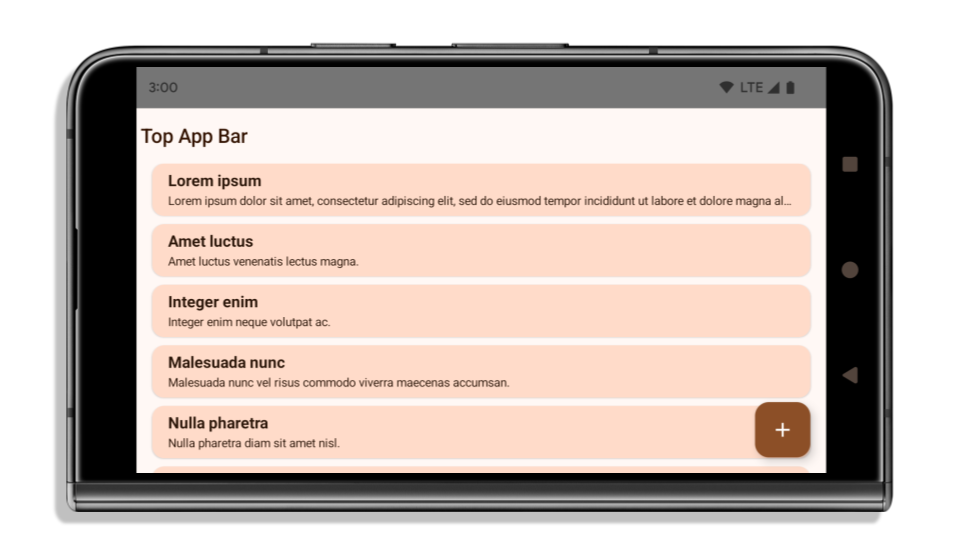
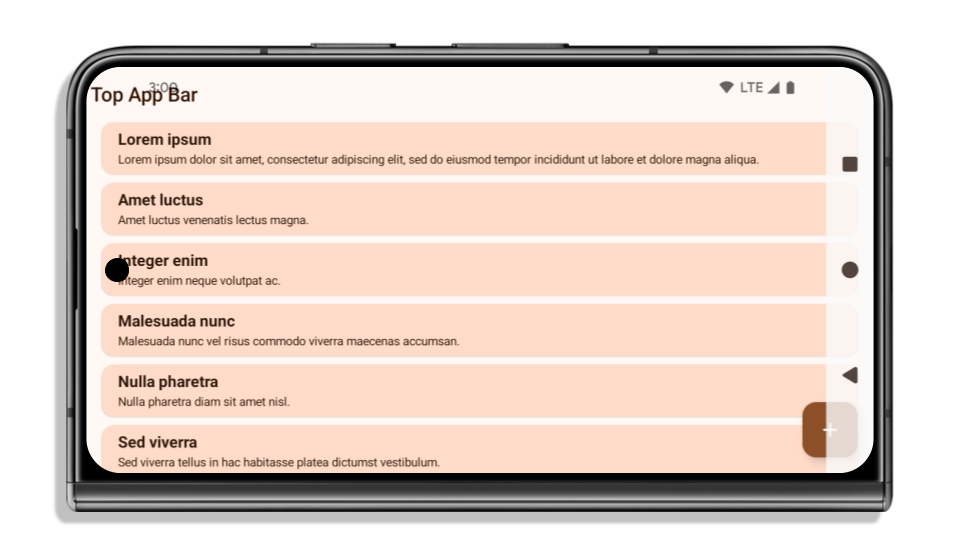
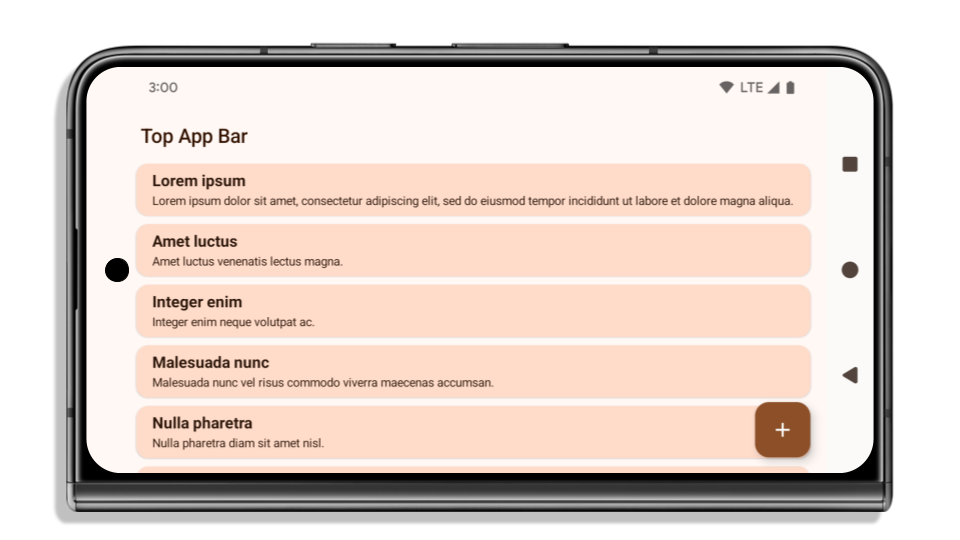
Le app sono edge-to-edge per impostazione predefinita sui dispositivi su cui è in esecuzione Android 15 se hanno come target Android 15 (livello API 35).
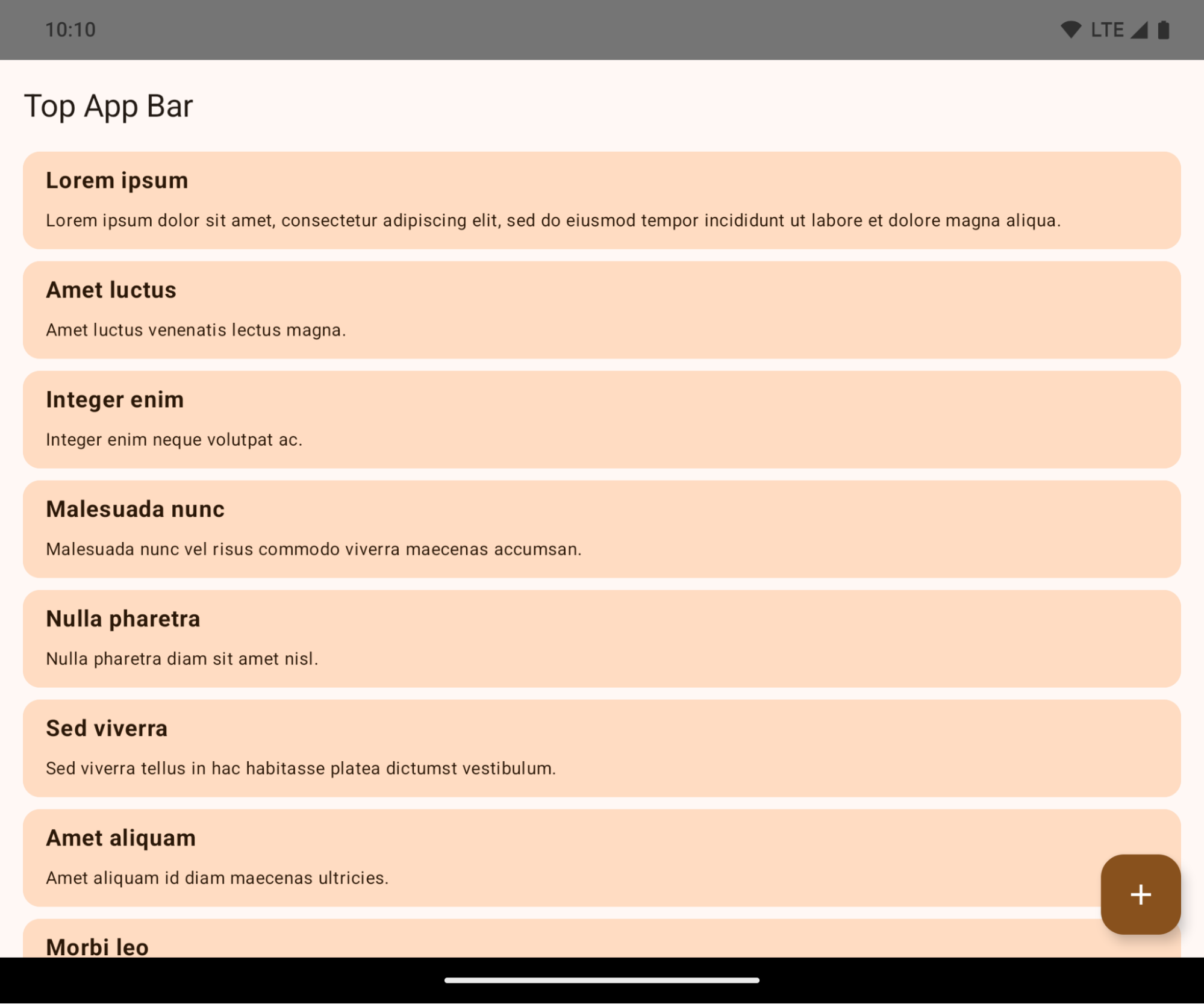
Si tratta di una modifica che comporta un'interruzione e che potrebbe influire negativamente sulla UI della tua app. Le modifiche riguardano le seguenti aree della UI:
- Barra di navigazione con handle per i gesti
- Trasparente per impostazione predefinita.
- L'offset inferiore è disattivato, quindi i contenuti vengono disegnati dietro la barra di navigazione di sistema, a meno che non vengano applicati gli inset.
setNavigationBarColoreR.attr#navigationBarColorsono deprecati e non influiscono sulla navigazione tramite gesti.setNavigationBarContrastEnforcedeR.attr#navigationBarContrastEnforcedcontinuano a non avere alcun effetto sulla navigazione tramite gesti.
- Navigazione con tre pulsanti
- Opacità impostata su 80% per impostazione predefinita, con il colore che potrebbe corrispondere allo sfondo della finestra.
- L'offset inferiore è disattivato, quindi i contenuti vengono disegnati dietro la barra di navigazione di sistema, a meno che non vengano applicati gli inset.
setNavigationBarColoreR.attr#navigationBarColorsono impostati in modo da corrispondere allo sfondo della finestra per impostazione predefinita. Lo sfondo della finestra deve essere un elemento disegnabile a colori per l'applicazione di questa impostazione predefinita. Questa API è deprecata, ma continua a influire sulla navigazione con tre pulsanti.setNavigationBarContrastEnforcedeR.attr#navigationBarContrastEnforcedsono impostati su true per impostazione predefinita, il che aggiunge uno sfondo opaco all'80% alla navigazione con tre pulsanti.
- Barra di stato
- Trasparente per impostazione predefinita.
- L'offset superiore è disattivato, quindi i contenuti vengono disegnati dietro la barra di stato, a meno che non vengano applicati gli inset.
setStatusBarColoreR.attr#statusBarColorsono deprecati e non hanno alcun effetto su Android 15.setStatusBarContrastEnforcedeR.attr#statusBarContrastEnforcedsono deprecati, ma hanno ancora un effetto su Android 15.
- Ritaglio display
layoutInDisplayCutoutModedelle finestre non mobili deve essereLAYOUT_IN_DISPLAY_CUTOUT_MODE_ALWAYS.SHORT_EDGES,NEVEReDEFAULTvengono interpretati comeALWAYSin modo che gli utenti non vedano una barra nera causata dal ritaglio display e che l'app appaia edge-to-edge.
L'esempio seguente mostra un'app prima e dopo aver scelto come target Android 15 (livello API 35) e prima e dopo aver applicato gli inset. Questo esempio non è esaustivo e potrebbe apparire in modo diverso su Android Auto.
Cosa controllare se la tua app è già edge-to-edge
Se la tua app è già edge-to-edge e applica gli inset, non dovresti riscontrare problemi, tranne nei seguenti scenari. Tuttavia, anche se ritieni di non essere interessato, ti consigliamo di testare la tua app.
- Hai una finestra non mobile, ad esempio un'
Activityche utilizzaSHORT_EDGES,NEVERoDEFAULTanzichéLAYOUT_IN_DISPLAY_CUTOUT_MODE_ALWAYS. Se l'app si arresta in modo anomalo all'avvio, il problema potrebbe essere dovuto alla schermata iniziale. Puoi eseguire l'upgrade della dipendenza core splashscreen alla versione 1.2.0-alpha01 o successive oppure impostarewindow.attributes.layoutInDisplayCutoutMode = WindowManager.LayoutInDisplayCutoutMode.always. - Potrebbero esserci schermate con meno traffico con UI occlusa. Verifica che queste schermate meno visitate non abbiano UI occlusa. Le schermate con meno traffico includono:
- Schermate di onboarding o di accesso
- Pagine Impostazioni
Cosa controllare se la tua app non è ancora edge-to-edge
Se la tua app non è ancora edge-to-edge, è molto probabile che tu sia interessato. Oltre agli scenari per le app già edge-to-edge, devi considerare quanto segue:
- Se la tua app utilizza i componenti di Material 3 (
androidx.compose.material3) in Compose, comeTopAppBar,BottomAppBar, eNavigationBar, è probabile che questi componenti non siano interessati perché gestiscono automaticamente gli inset. - Se la tua app utilizza i componenti di Material 2 (
androidx.compose.material) in Compose, questi componenti non gestiscono automaticamente gli inset. Tuttavia, puoi accedere agli inset e applicarli manualmente. In androidx.compose.material 1.6.0 e versioni successive, utilizza il parametrowindowInsetsper applicare manualmente gli inset perBottomAppBar,TopAppBar,BottomNavigationeNavigationRail. Allo stesso modo, utilizza ilcontentWindowInsetsparametro perScaffold. - Se la tua app utilizza le visualizzazioni e i componenti Material
(
com.google.android.material), la maggior parte dei componenti Material basati sulle visualizzazioni, comeBottomNavigationView,BottomAppBar,NavigationRailViewoNavigationView, gestisce gli inset e non richiede ulteriori interventi. Tuttavia, devi aggiungereandroid:fitsSystemWindows="true"se utilizziAppBarLayout. - Per i composable personalizzati, applica gli inset manualmente come spaziatura interna. Se i tuoi
contenuti si trovano all'interno di un
Scaffold, puoi utilizzare gli inset utilizzando iScaffoldvalori di spaziatura interna. In caso contrario, applica la spaziatura interna utilizzando uno deiWindowInsets. - Se la tua app utilizza le visualizzazioni e
BottomSheet,SideSheeto container personalizzati, applica la spaziatura interna utilizzandoViewCompat.setOnApplyWindowInsetsListener. PerRecyclerView, applica la spaziatura interna utilizzando questo listener e aggiungi ancheclipToPadding="false".
Cosa controllare se la tua app deve offrire una protezione dello sfondo personalizzata
Se la tua app deve offrire una protezione dello sfondo personalizzata alla navigazione con tre pulsanti o
alla barra di stato, deve posizionare un composable o una visualizzazione dietro la barra di sistema
utilizzando WindowInsets.Type#tappableElement() per ottenere l'altezza della barra di navigazione con tre pulsanti
o WindowInsets.Type#statusBars.
Risorse aggiuntive per la modalità edge-to-edge
Per ulteriori considerazioni sull'applicazione degli inset, consulta le guide Visualizzazioni edge-to-edge e Compose edge-to-edge.
API deprecate
Le seguenti API sono deprecate, ma non disattivate:
R.attr#enforceStatusBarContrastR.attr#navigationBarColor(per la navigazione con tre pulsanti, con alfa 80%)Window#isStatusBarContrastEnforcedWindow#setNavigationBarColor(per la navigazione con tre pulsanti, con alfa 80%)Window#setStatusBarContrastEnforced
Le seguenti API sono deprecate e disattivate:
R.attr#navigationBarColor(per la navigazione tramite gesti)R.attr#navigationBarDividerColorR.attr#statusBarColorWindow#setDecorFitsSystemWindowsWindow#getNavigationBarColorWindow#getNavigationBarDividerColorWindow#getStatusBarColorWindow#setNavigationBarColor(per la navigazione tramite gesti)Window#setNavigationBarDividerColorWindow#setStatusBarColor
Stable configuration
Se la tua app ha come target Android 15 (livello API 35) o versioni successive, Configuration non
esclude più le barre di sistema. Se utilizzi le dimensioni dello schermo nella classe Configuration per il calcolo del layout, devi sostituirle con alternative migliori, come ViewGroup, WindowInsets o WindowMetricsCalculator appropriati, a seconda delle tue esigenze.
Configuration è disponibile dall'API 1. In genere viene ottenuto da
Activity.onConfigurationChanged. Fornisce informazioni come densità, orientamento e dimensioni delle finestre. Una caratteristica importante delle dimensioni della finestra
restituite da Configuration è che in precedenza escludeva le barre di sistema.
La dimensione della configurazione viene in genere utilizzata per la selezione delle risorse, ad esempio
/res/layout-h500dp, e questo è ancora un caso d'uso valido. Tuttavia, il suo utilizzo per
il calcolo del layout è sempre stato sconsigliato. In questo caso, ti consigliamo di allontanarti
immediatamente. Dovresti sostituire l'utilizzo di Configuration con qualcosa
di più adatto in base al tuo caso d'uso.
Se lo utilizzi per calcolare il layout, utilizza un ViewGroup appropriato, ad esempio
CoordinatorLayout o ConstraintLayout. Se lo utilizzi per determinare l'altezza
della barra di navigazione di sistema, utilizza WindowInsets. Se vuoi conoscere le dimensioni attuali
della finestra dell'app, utilizza computeCurrentWindowMetrics.
Il seguente elenco descrive i campi interessati da questa modifica:
- Le dimensioni
Configuration.screenWidthDpescreenHeightDpnon escludono più le barre di sistema. Configuration.smallestScreenWidthDpè interessato indirettamente dalle modifiche ascreenWidthDpescreenHeightDp.Configuration.orientationè interessato indirettamente dalle modifiche apportate ascreenWidthDpescreenHeightDpsui dispositivi quasi quadrati.Display.getSize(Point)è interessato indirettamente dalle modifiche apportate aConfiguration. Questa funzionalità è stata ritirata a partire dal livello API 30.Display.getMetrics()funziona già in questo modo dal livello API 33.
L'attributo elegantTextHeight ha come valore predefinito true
For apps targeting Android 15 (API level 35), the
elegantTextHeight TextView attribute
becomes true by default, replacing the compact font used by default with some
scripts that have large vertical metrics with one that is much more readable.
The compact font was introduced to prevent breaking layouts; Android 13 (API
level 33) prevents many of these breakages by allowing the text layout to
stretch the vertical height utilizing the fallbackLineSpacing
attribute.
In Android 15, the compact font still remains in the system, so your app can set
elegantTextHeight to false to get the same behavior as before, but it is
unlikely to be supported in upcoming releases. So, if your app supports the
following scripts: Arabic, Lao, Myanmar, Tamil, Gujarati, Kannada, Malayalam,
Odia, Telugu or Thai, test your app by setting elegantTextHeight to true.

elegantTextHeight behavior for apps targeting Android 14 (API level 34) and lower.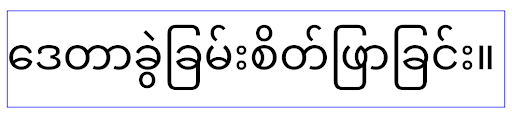
elegantTextHeight behavior for apps targeting Android 15.Modifiche alla larghezza di TextView per forme di lettere complesse
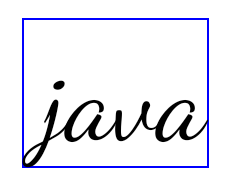
In previous versions of Android, some cursive fonts or languages that have
complex shaping might draw the letters in the previous or next character's area.
In some cases, such letters were clipped at the beginning or ending position.
Starting in Android 15, a TextView allocates width for drawing enough space
for such letters and allows apps to request extra paddings to the left to
prevent clipping.
Because this change affects how a TextView decides the width, TextView
allocates more width by default if the app targets Android 15 (API level 35) or
higher. You can enable or disable this behavior by calling the
setUseBoundsForWidth API on TextView.
Because adding left padding might cause a misalignment for existing layouts, the
padding is not added by default even for apps that target Android 15 or higher.
However, you can add extra padding to preventing clipping by calling
setShiftDrawingOffsetForStartOverhang.
The following examples show how these changes can improve text layout for some fonts and languages.

<TextView
    android:fontFamily="cursive"
    android:text="java" />
<TextView
    android:fontFamily="cursive"
    android:text="java"
    android:useBoundsForWidth="true"
    android:shiftDrawingOffsetForStartOverhang="true" />
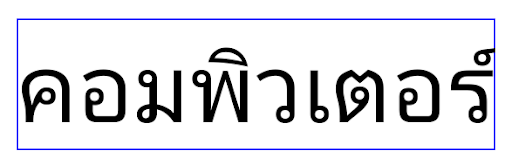
<TextView
    android:text="คอมพิวเตอร์" />
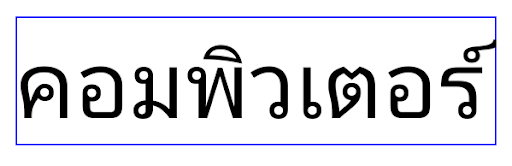
<TextView
    android:text="คอมพิวเตอร์"
    android:useBoundsForWidth="true"
    android:shiftDrawingOffsetForStartOverhang="true" />
Altezza della riga predefinita sensibile alle impostazioni internazionali per EditText
Nelle versioni precedenti di Android, il layout del testo allungava l'altezza del testo per raggiungere l'altezza della riga del carattere corrispondente alle impostazioni internazionali correnti. Ad esempio, se i contenuti erano in giapponese, l'altezza del testo è aumentata leggermente perché l'altezza della riga del carattere giapponese è leggermente superiore a quella di un carattere latino. Tuttavia, nonostante queste differenze nelle altezze delle righe, le dimensioni dell'elemento EditText erano uniformi, indipendentemente dall'impostazione internazionale utilizzata, come illustrato nell'immagine seguente:

EditText che possono contenere testo in inglese (en), giapponese (ja) e birmano (my). L'EditText è della stessa altezza, anche se queste lingue hanno altezze diverse.Per le app che hanno come target Android 15 (livello API 35), ora è stata riservata un'altezza minima della riga per EditText in modo che corrisponda al carattere di riferimento per le impostazioni internazionali specificate, come mostrato nell'immagine seguente:

EditText che possono contenere testo in inglese (en), giapponese (ja) e birmano (my). L'altezza del carattere EditText ora include lo spazio per l'altezza della riga predefinita per i caratteri di queste lingue.Se necessario, l'app può ripristinare il comportamento precedente specificando l'attributo useLocalePreferredLineHeightForMinimum su false e può impostare metriche verticali minime personalizzate utilizzando l'API setMinimumFontMetrics in Kotlin e Java.
Fotocamera e contenuti multimediali
Android 15 apporta le seguenti modifiche al comportamento della fotocamera e dei contenuti multimediali per le app che hanno come target Android 15 o versioni successive.
Restrizioni relative alla richiesta di focus audio
Apps that target Android 15 (API level 35) must be the top app or running a
foreground service in order to request audio focus. If an app
attempts to request focus when it does not meet one of these requirements, the
call returns AUDIOFOCUS_REQUEST_FAILED.
You can learn more about audio focus at Manage audio focus.
Restrizioni non SDK aggiornate
Android 15 includes updated lists of restricted non-SDK interfaces based on collaboration with Android developers and the latest internal testing. Whenever possible, we make sure that public alternatives are available before we restrict non-SDK interfaces.
If your app does not target Android 15, some of these changes might not immediately affect you. However, while it's possible for your app to access some non-SDK interfaces depending on your app's target API level, using any non-SDK method or field always carries a high risk of breaking your app.
If you are unsure if your app uses non-SDK interfaces, you can test your app to find out. If your app relies on non-SDK interfaces, you should begin planning a migration to SDK alternatives. Nevertheless, we understand that some apps have valid use cases for using non-SDK interfaces. If you can't find an alternative to using a non-SDK interface for a feature in your app, you should request a new public API.
To learn more about the changes in this release of Android, see Updates to non-SDK interface restrictions in Android 15. To learn more about non-SDK interfaces generally, see Restrictions on non-SDK interfaces.