Applicable XR devices This guidance helps you build experiences for these types of XR devices. [Learn about XR device types →](https://developer.android.com/develop/xr/devices)  XR Headsets [](https://developer.android.com/develop/xr/devices#xr-headsets)  Wired XR Glasses [](https://developer.android.com/develop/xr/devices#xr-glasses)  Audio \&
Display Glasses [](https://developer.android.com/develop/xr/devices#audio-display) [Learn about XR device types →](https://developer.android.com/develop/xr/devices)
Your Android Studio project encompasses all the files and necessary
configurations for developing an Android XR app with the Jetpack XR SDK. This
includes source code, assets, test code, and build configurations.
If you're adding XR experiences to an existing app:
1. Open your existing Android Studio project in [the latest Canary build of
Android Studio](https://developer.android.com/develop/xr/jetpack-xr-sdk/get-studio).
2. [Set up the Jetpack XR SDK](https://developer.android.com/develop/xr/jetpack-xr-sdk/set-up-sdk).
3. See the following topics for more information, depending on what types of experiences you're trying to build:
- **Building immersive experiences** : If you're spatializing an existing app for [XR headsets](https://developer.android.com/develop/xr/devices#xr-headsets) and [XR glasses](https://developer.android.com/develop/xr/devices#xr-glasses), see [Bring your Android
app into 3D with XR](https://developer.android.com/develop/xr/jetpack-xr-sdk/add-xr-to-existing) for more information.
- **Building augmented experiences** : If you're extending your mobile app to [audio glasses or display glasses](https://developer.android.com/develop/xr/devices#audio-display), see [Start building for audio
glasses and display glasses](https://developer.android.com/develop/xr/jetpack-xr-sdk/ai-glasses/build) to get started.
## Create a new project
If you want to start a new Android XR project in Android Studio, follow these
steps:
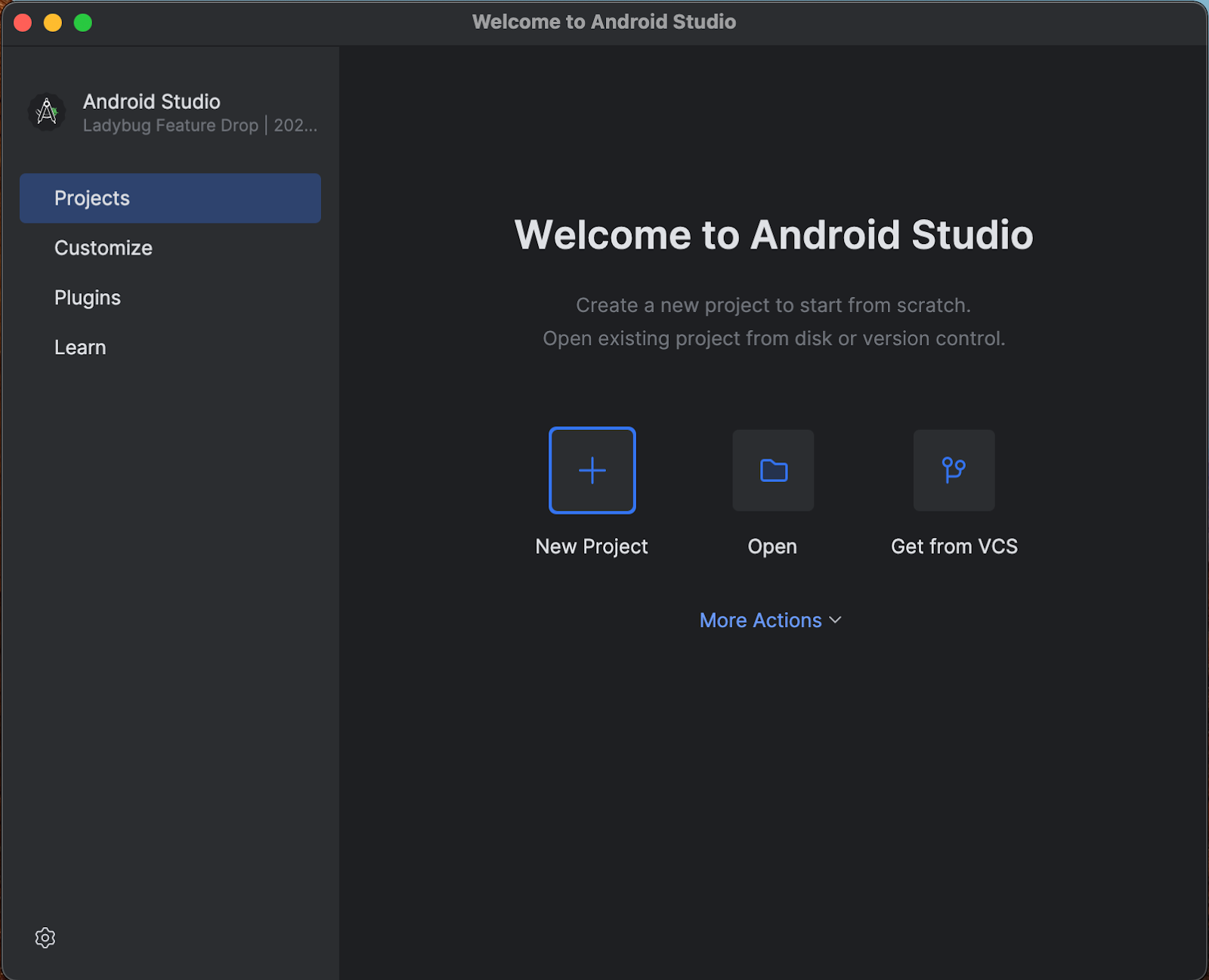
1. Open Android Studio.
1. If you see the **Welcome to Android Studio** window, click **New
Project**.
2. If Android Studio reopened an existing project, select **File \> New \>
New Project** from the menu bar.
2. From the list of **Templates** , select **XR** , and then choose the template
that corresponds to the [type of XR device](https://developer.android.com/develop/xr/devices) you want to build for.
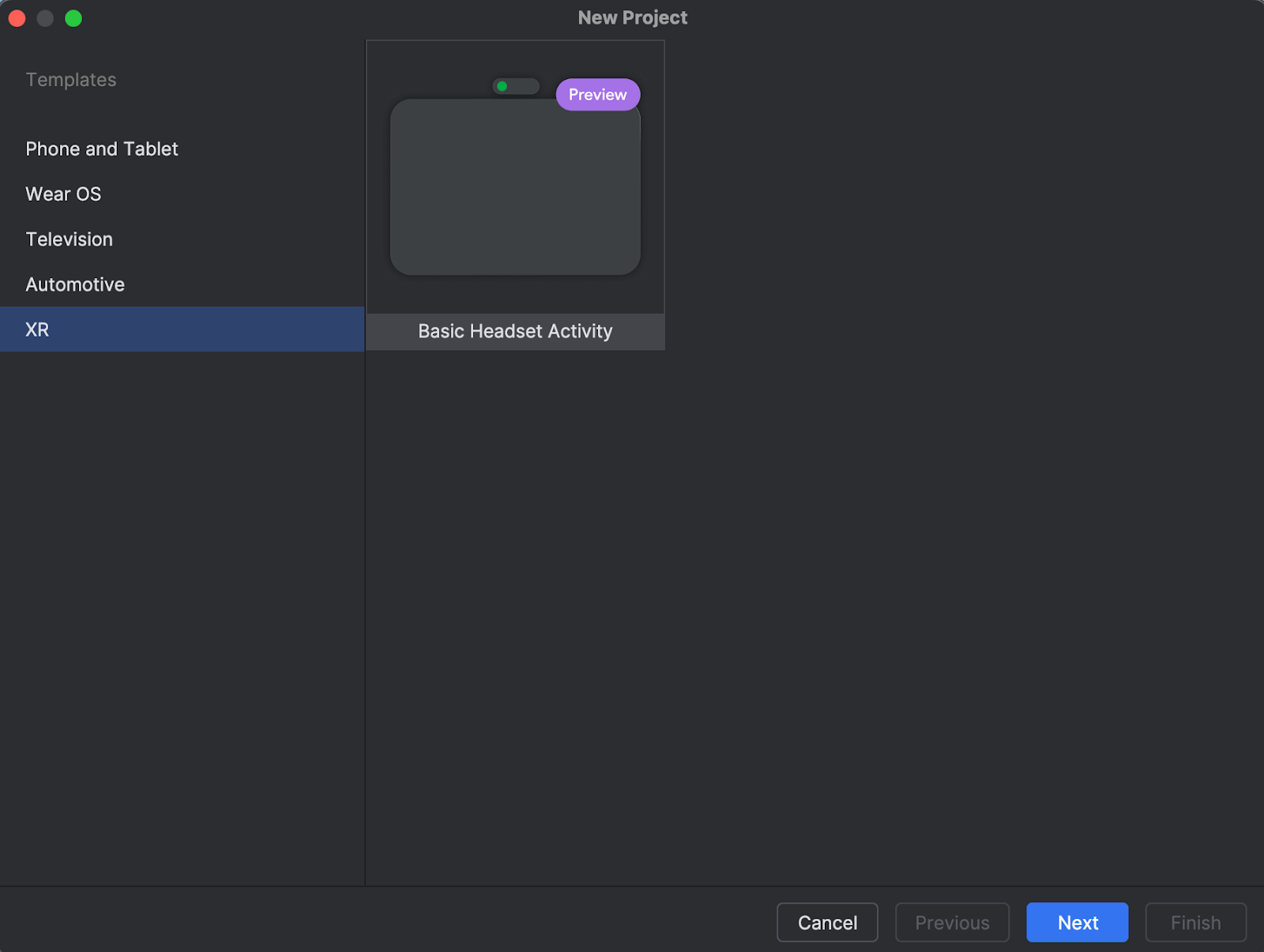
3. Click **Next**.
4. Choose a name for your project, and then click **Finish**.
## Next steps
Explore the code provided in the template, [set up the Jetpack XR SDK](https://developer.android.com/develop/xr/jetpack-xr-sdk/set-up-sdk), and
check out the documentation for [building immersive experiences](https://developer.android.com/develop/xr/jetpack-xr-sdk/add-xr-to-existing) for XR
headsets and XR glasses, and the documentation for [building augmented
experiences](https://developer.android.com/develop/xr/jetpack-xr-sdk/ai-glasses/build) for audio glasses and display glasses.